
1. What Is the CA Foundation Examination?
The Institute of Chartered Accountants of India (ICAI), established under the Chartered Accountants Act, 1949, is the premier statutory accounting body governing the profession of Chartered Accountancy across the nation. The CA Foundation examination serves as the mandatory entrance gateway for Class 12 school-leavers seeking to qualify as Chartered Accountants in India. Over 1,20,000 students register for CA Foundation across its examination cycles each year, competing to cross the threshold into CA Intermediate and the prestigious 2-year practical articleship training that follows.
Under the landmark ICAI New Scheme of Education and Training launched by the Ministry of Corporate Affairs, CA Foundation underwent significant structural streamlining. Previously known as the Common Proficiency Test (CPT) and later modified with Business Mathematics and Business Correspondence, the revised 2026 curriculum eliminates secondary subjects like Business Correspondence and Reporting (BCR) and Business and Commercial Knowledge (BCK). Instead, it focuses squarely on core analytical rigor across four 100-mark disciplines: Accounting, Business Laws, Quantitative Aptitude, and Business Economics.
Whether you completed Class 12 with Commerce, Science PCM/PCB, or Humanities, CA Foundation is completely stream-agnostic. While Commerce students naturally have familiarity with journal entries and ledger balancing, students from Science backgrounds frequently outperform in Quantitative Aptitude and logical data reasoning. The playing field is equalized by ICAI's conceptual textbooks, which construct accounting principles from absolute first principles.
2. Eligibility Criteria, Registration Timeline & Exam Cycles
Students often wonder at what exact moment they are eligible to register and sit for the exam. ICAI provides a two-stage process that allows school students to initiate preparation without wasting a single academic semester.
2.1 Provisional vs. Regular Registration
A student can provisionally register for CA Foundation after passing their Class 10 board examinations. This early registration grants access to the official ICAI physical study material and the Centralized Distribution System (CDS) portal. However, an aspirant can only appear for the CA Foundation exam after appearing for their Senior Secondary (Class 12) board examinations conducted by a recognized central board (CBSE, CISCE) or state educational board.
2.2 The Mandatory Four-Month Study Period
To sit for any examination cycle, a candidate must be registered with the Board of Studies (BoS) of ICAI at least four months prior to the first day of the examination month. Unlike competitive entrance tests held once a year like NEET or JEE Advanced, ICAI conducts the CA Foundation exam three times annually—in January, June, and September.
| Exam Term | Registration Cutoff Date | Exam Form Window | Eligible Candidate Batch |
|---|---|---|---|
| January Cycle | September 1 of preceding year | November (preceding year) | Class 12 pass-outs & previous repeaters |
| June Cycle | February 1 of current year | March – April | Fresh Class 12 board exam examinees |
| September Cycle | May 1 of current year | July – August | Students seeking 4+ months focused prep |
3. Paper-by-Paper Syllabus Breakdown & Exam Pattern (ICAI New Scheme)
The CA Foundation exam under the New Scheme consists of four comprehensive papers carrying 100 marks each, for a cumulative total of 400 marks. The structure blends two traditional subjective, pen-and-paper descriptive papers with two speed-intensive, negative-marked objective MCQ papers.
| Paper No. & Subject | Marks | Exam Mode | Duration | Negative Marking |
|---|---|---|---|---|
| Paper 1: Accounting | 100 Marks | Subjective / Descriptive | 3 Hours (2:00 PM – 5:00 PM) | Nil |
| Paper 2: Business Laws | 100 Marks | Subjective / Descriptive | 3 Hours (2:00 PM – 5:00 PM) | Nil |
| Paper 3: Quantitative Aptitude | 100 Marks | Objective / OMR MCQs | 2 Hours (2:00 PM – 4:00 PM) | 0.25 Mark per wrong answer |
| Paper 4: Business Economics | 100 Marks | Objective / OMR MCQs | 2 Hours (2:00 PM – 4:00 PM) | 0.25 Mark per wrong answer |
Paper 1: Accounting (100 Marks — Descriptive)
Paper 1 tests theoretical framework and practical application of accounting mechanics. Crucial topics include Theoretical Framework (Accounting Concepts, Principles, Conventions, and Capital vs. Revenue Expenditures), Accounting Process (Trial Balance, Cash Book, Rectification of Errors), Bank Reconciliation Statement (BRS), Inventories (FIFO, Weighted Average), Depreciation & Amortization, Bills of Exchange, Final Accounts of Sole Proprietors, Financial Statements of Not-for-Profit Organisations (NPO), Accounts from Incomplete Records (Single Entry), and Partnership Accounts (Admission, Retirement, Death, and Dissolution). Company Accounts (Issue of Shares, Forfeiture, Re-issue, and Redemption of Preference Shares) forms nearly 15–20% of the overall paper.
Paper 2: Business Laws (100 Marks — Descriptive)
In the New Scheme, Business Laws has been expanded to a full 100-mark paper by removing the previous BCR English section. It covers five foundational Indian statutes: The Indian Regulatory Framework (overview of the Indian legal system, courts, and legislative processes), The Indian Contract Act, 1872 (Offer, Acceptance, Consideration, Capacity of Parties, Free Consent, Legality of Object, Void Agreements, Performance, and Breach), The Sale of Goods Act, 1930 (Conditions and Warranties, Transfer of Ownership, Unpaid Seller Rights), The Indian Partnership Act, 1932 (Nature of Partnership, Rights and Duties, Dissolution), The Limited Liability Partnership Act, 2008 (LLP incorporation, characteristics, partners' liability), and The Companies Act, 2013 (Company characteristics, Corporate Veil doctrine, Classification of Companies, Incorporation, Memorandum and Articles of Association).
Paper 3: Quantitative Aptitude (100 Marks — Objective OMR)
Divided into three distinct modules: Business Mathematics (40 Marks) covering Ratio, Proportion, Indices, Logarithms, Equations, Linear Inequalities, Time Value of Money (Simple Interest, Compound Interest, Annuity, Perpetuity, Net Present Value—the most scoring chapter accounting for 12–15 marks), Permutations & Combinations, Sequence and Series (AP & GP), and basic Differential & Integral Calculus. Logical Reasoning (20 Marks) covers Number Series, Coding-Decoding, Odd Man Out, Direction Sense Test, Seating Arrangements, and Blood Relations. Statistics (40 Marks) covers Statistical Representation of Data, Measures of Central Tendency and Dispersion, Probability, Theoretical Distributions (Binomial, Poisson, Normal), and Index Numbers.
Paper 4: Business Economics (100 Marks — Objective OMR)
Under the revised scheme, Economics carries the entire 100 marks. Topics include Introduction to Business Economics, Theory of Demand and Supply, Theory of Consumer Behaviour (Utility Analysis, Indifference Curve), Theory of Production and Cost, Price Determination in Different Markets (Perfect Competition, Monopoly, Monopolistic, Oligopoly), Determination of National Income and Public Finance (Fiscal Policy, Budget, Government Deficits), Money Market (Money Demand, Monetary Policy of RBI), International Trade (Theories, Tariffs, Exchange Rates), and Indian Economy (Current macroeconomic trends and structural reforms).
4. Passing Criteria & Negative Marking Mechanics
Understanding ICAI's dual evaluation criteria is vital to planning your revision. Many students score over 70 in three papers but fail because they miss the threshold in a single subject by just two marks.
gavel The 40-50 Golden Rule of ICAI
- check_circle Individual Paper Minimum: You must score at least 40% (40 out of 100) in each of the four papers.
- check_circle Aggregate Minimum: You must secure at least 50% aggregate (200 out of 400) across all four papers combined in a single attempt.
- check_circle Negative Marking Reality: In Papers 3 & 4, every incorrect MCQ deducts 0.25 marks. Leaving an MCQ blank carries zero penalty. Never engage in blind guesswork.
Historical Pass Percentage Trends (Past 5 Examination Sessions)
ICAI maintains rigorous evaluation standards to protect the integrity of the Chartered Accountancy credential. While CA Foundation has the highest pass percentage among all three CA tiers, nearly 7 out of 10 candidates do not clear on their initial attempt. Reviewing recent trends highlights the consistency of ICAI grading:
| Examination Session | Total Appeared Candidates | Total Passed Candidates | Overall Pass Percentage |
|---|---|---|---|
| June 2024 Session | 91,900 | 13,749 | 14.96% (Toughest session) |
| December 2023 Session | 1,12,657 | 34,095 | 30.26% |
| June 2023 Session | 1,03,517 | 25,860 | 24.98% |
| December 2022 Session | 1,26,015 | 36,864 | 29.25% |
| June 2022 Session | 93,729 | 23,693 | 25.28% |
5. Complete Official Fee Structure & Free CDS Books Guide
The total cost to attempt CA Foundation directly through ICAI is exceptionally modest compared to professional undergraduate degrees like B.Tech or private BBA programs. Below is the itemized breakdown of mandatory ICAI fees for Indian domestic students:
| Fee Component | Amount (INR) | Payment Frequency | What It Covers |
|---|---|---|---|
| Foundation Registration Fee | ₹9,000 | One-time (valid 4 years) | Enrollment with ICAI Board of Studies + 100% free physical book coupons |
| Student Activity Fee | ₹200 | One-time | Access to regional branch workshops and seminars |
| Student Journal Subscription | ₹400 (Optional) | Annual | Monthly print issue of The Chartered Accountant Student Journal |
| Examination Application Fee | ₹1,500 | Per examination attempt | Admit card issuance, exam center allocation & evaluation |
How to Claim Your Free Physical Books via ICAI CDS Portal: Once your online registration is approved on the ICAI SSP (Self Service Portal), you will receive an SMS and email notification with CDS credentials. Log in to icai-cds.org, add the complete CA Foundation Study Kit (New Scheme) to your cart, and apply the automatic 100% discount coupon issued to your student account. Blue Dart or India Post will deliver the complete 4-subject physical book package directly to your doorstep at ₹0 delivery charge.
6. Recommended Books, Reference Scanners & Approved Calculators
While the free ICAI modules provide comprehensive conceptual theory, rank-holders universally rely on topic-wise past year question (PYQ) scanners, mock test compilers, and high-speed commercial calculators to ensure exam hall efficiency.
Curated Essential Study Material & Exam Tools (2026)
Below are the top-rated reference books, scanners, and standard calculators used by toppers and recommended by senior CA faculty. We have provided direct access links to order them online via Amazon India.
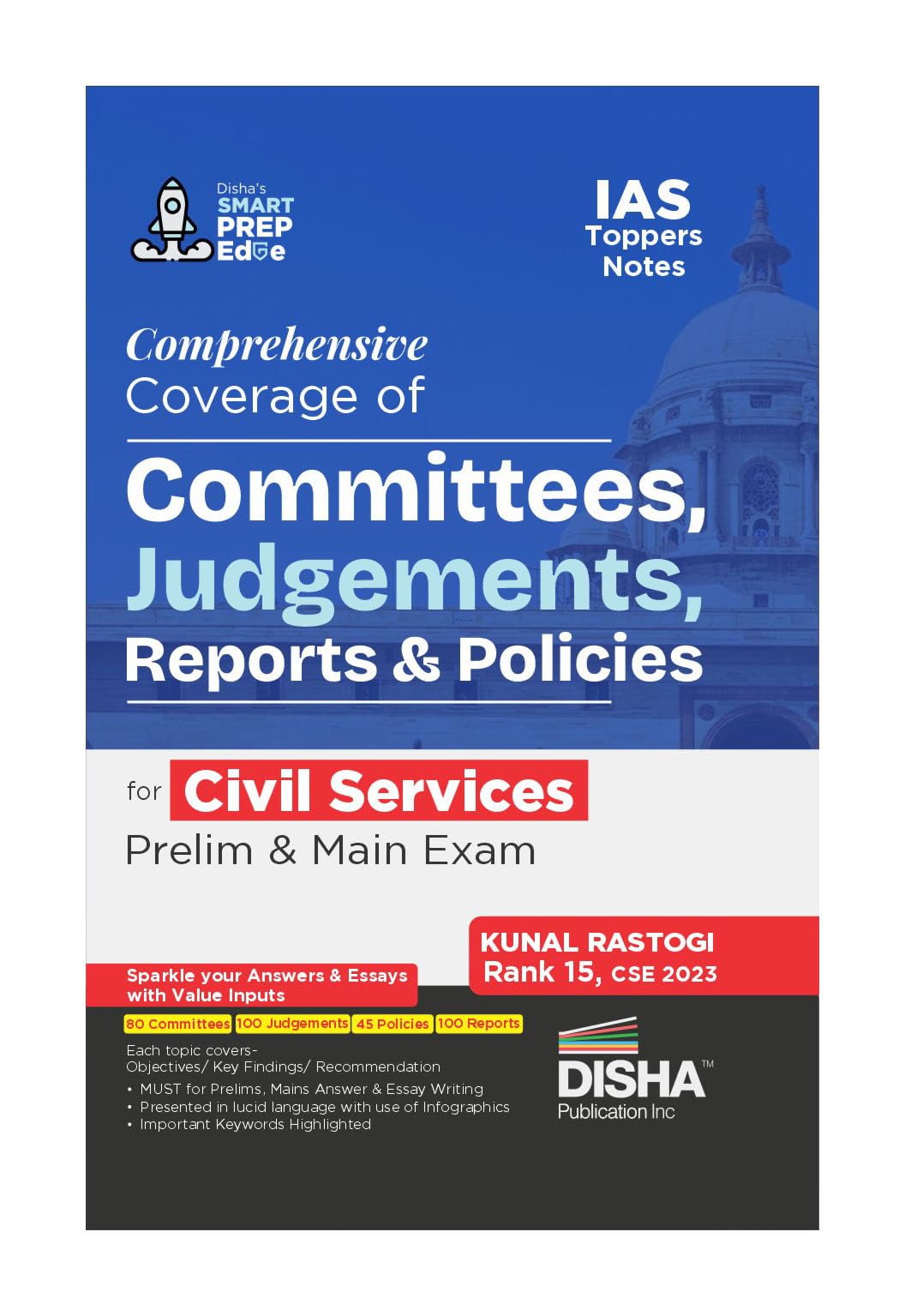
Taxmann's CRACKER COMBO for CA Foundation (All 4 Papers Solved)
Complete 4-subject question bank containing sub-topic-wise past exam questions, ICAI RTPs, and MTPs with chapter-wise trend analysis.
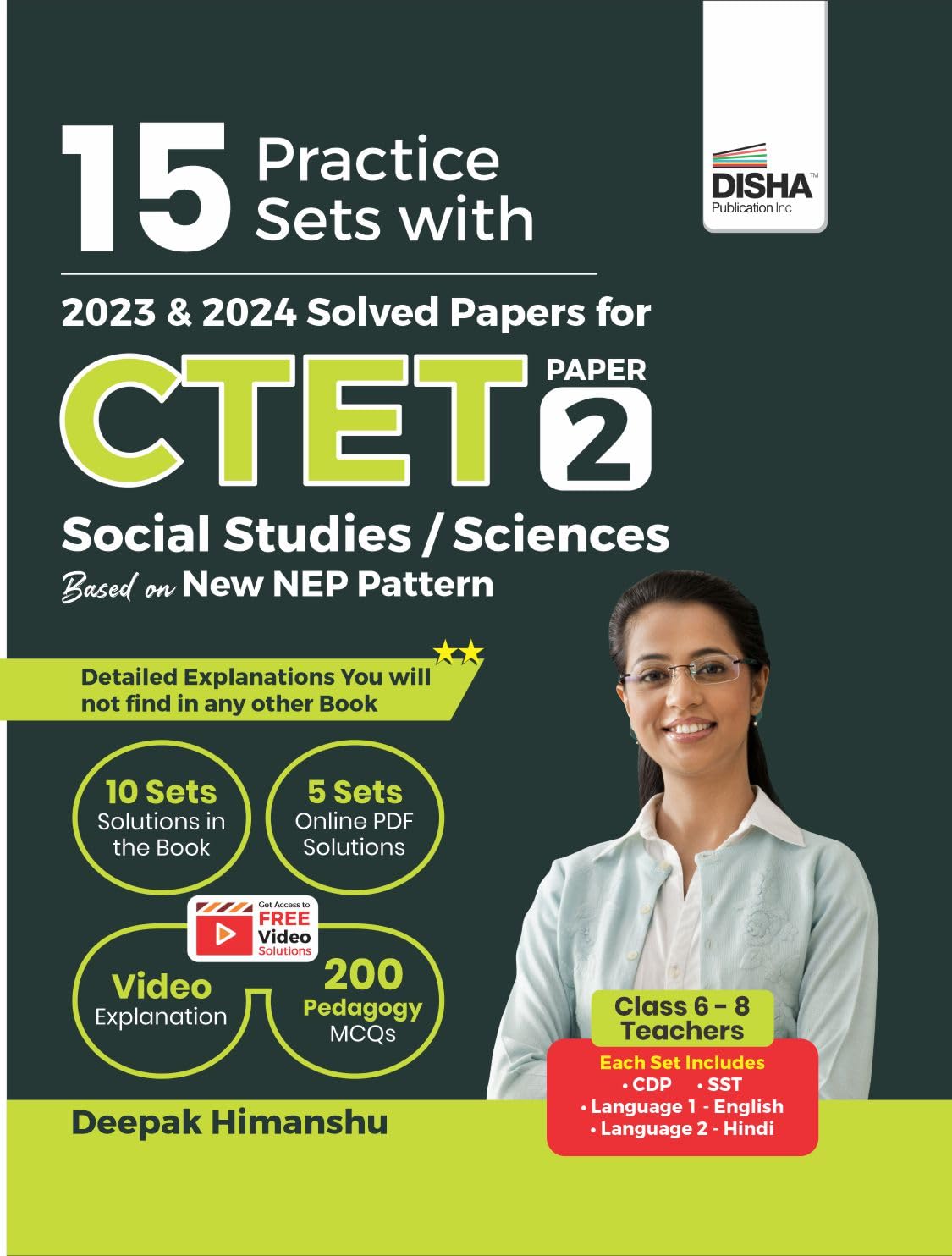
Taxmann's CRACKER Quantitative Aptitude (Maths & Stats MCQs)
Complete collection of past exam questions, calculator shortcuts for Time Value of Money, and step-by-step solutions for Math, Stats & LR.
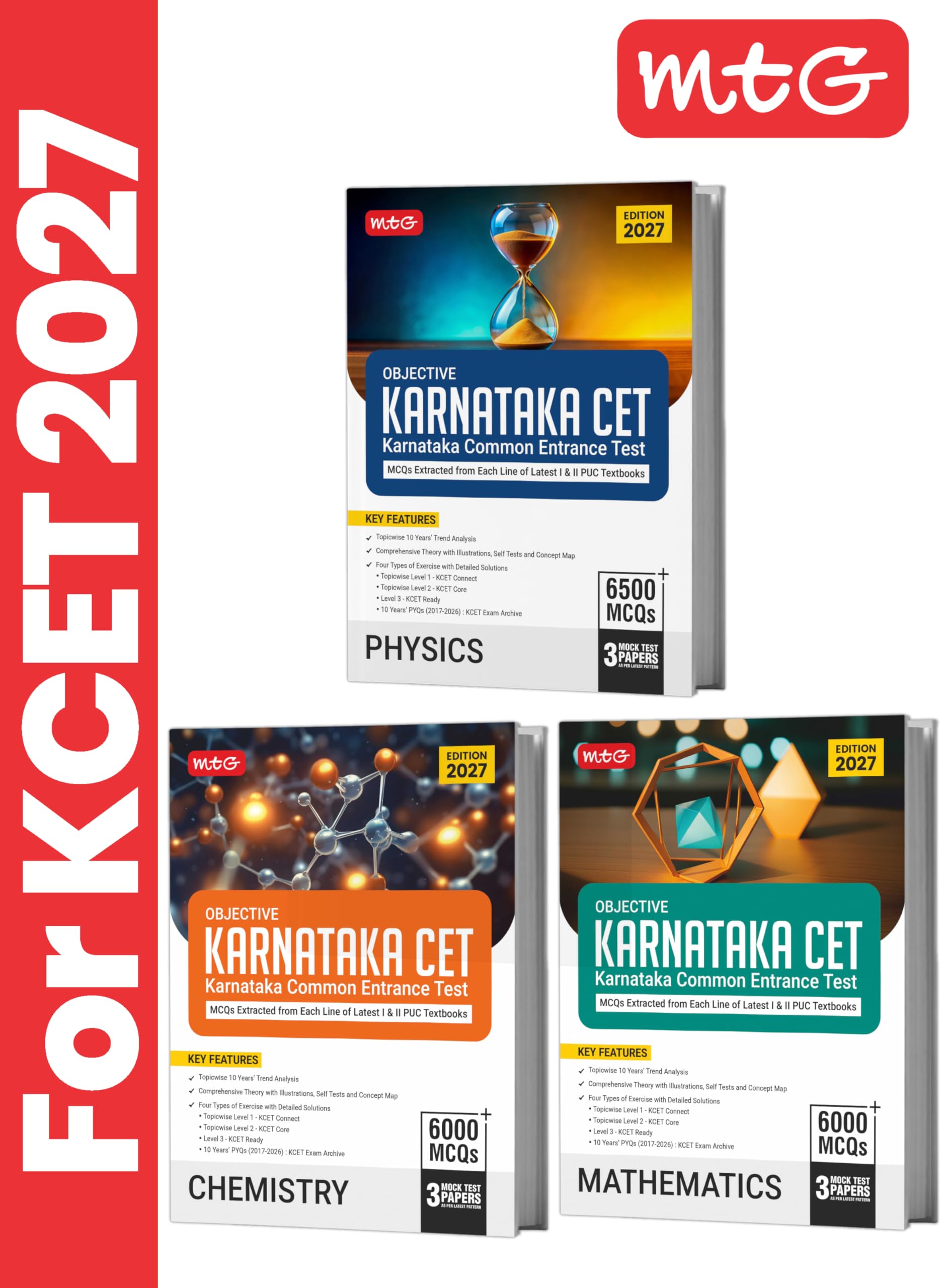
Taxmann's CRACKER Business Laws (Paper 2 Source-Tagged)
Full coverage of Indian Contract Act, Sale of Goods, Indian Partnership, LLP & Companies Act with source-tagged model case answers.
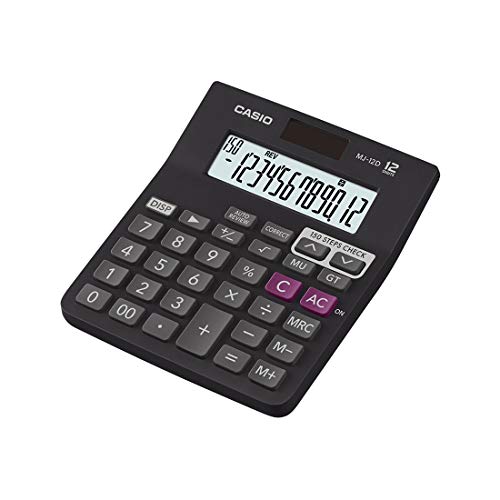
Casio MJ-12D 150 Steps Check & Correct Desktop Calculator (Grey)
The official standard 12-digit commercial desktop calculator for CA exams with step review, GT key, tax calculations, and tough keys.
7. Self-Study vs. Paid Coaching: Can You Clear Without ₹50,000 Classes?
One of the most persistent myths pushed by commercial coaching centres is that CA Foundation cannot be cleared without enrolling in expensive coaching packages costing between ₹35,000 and ₹75,000. In reality, thousands of students crack the exam on their first attempt solely through disciplined self-study.
Let us compare the two approaches across vital preparation parameters:
| Evaluation Metric | Self-Study Path | Commercial Coaching Path |
|---|---|---|
| Total Out-of-Pocket Cost | ₹9,800 (ICAI registration & exam fees only) | ₹45,000 – ₹85,000 (Tuition + Notes + Test Series) |
| Daily Schedule Flexibility | 100% self-paced; study around college/school | Fixed 4–6 hours daily lecture batches |
| Primary Study Source | ICAI Modules, BoS Live Lectures, YouTube marathons | Coaching proprietary summaries & question handouts |
| Pass Rate Reality | High for disciplined students who finish modules | Identical (Coaching cannot substitute personal problem-solving) |
If you choose self-study, leverage ICAI's free resources: the BoS Knowledge Portal, official BoS Mobile App, and free chapter-by-chapter revision sessions streamed live on ICAI's YouTube channel. Supplement difficult Math and Law concepts with free YouTube playlists from reputable CA educators such as CA Parveen Sharma, CA Harsh Gupta, and CA Pranav Popat.
8. Day-by-Day 120-Day (4 Months) Master Study Timetable
A structured 120-day roadmap divides your 4-month preparation timeline into three well-defined operational phases: Concept Mastery, Intensive Problem-Solving, and Full-Length Simulated Mocks.
| Phase & Days | Primary Focus | Daily Target Tasks | Milestone Target |
|---|---|---|---|
| Phase 1: Days 1–60 | First Complete Reading of ICAI Modules | Study 2 subjects daily (3 hrs each: 1 descriptive + 1 objective). Solve every illustration. | 100% syllabus coverage across all 4 subjects |
| Phase 2: Days 61–95 | First Revision & Scanner Solving | Solve 5 past exam papers per subject. Write descriptive law answers by hand under time limits. | Identify personal weak chapters & memorize law sections |
| Phase 3: Days 96–120 | Mock Tests (MTP) & RTP Drills | Sit for full-length 3-hour mocks between 2:00 PM and 5:00 PM to condition your biological clock. | Score 250+ in official ICAI Mock Test Papers |
Recommended Daily Study Schedule (6–8 Hours)
- Slot 1 (Morning 7:00 AM – 9:30 AM): Paper 2 (Business Laws) — Your mind is freshest in the morning. Dedicate this slot to understanding legal concepts, memorizing section numbers, and practicing descriptive case study answers using the Fact-Provision-Analysis-Conclusion structure.
- Slot 2 (Late Morning 10:30 AM – 1:00 PM): Paper 1 (Accounting) — Practice heavy numerical questions by hand: Partnership Dissolution, NPO, and Issue of Shares. Avoid auditing solutions passively; work out every calculation on ledger paper.
- Slot 3 (Afternoon 2:00 PM – 4:00 PM): Exam Conditioning / Paper 3 (Quantitative Aptitude) — Train during actual exam hours (2:00 PM to 4:00 PM) to avoid afternoon drowsiness. Drill calculator tricks for Annuities and Statistics formulas.
- Slot 4 (Evening 5:30 PM – 7:30 PM): Paper 4 (Business Economics) — Revise microeconomic graphs, elasticity formulas, and national income aggregates. Solve 50–70 fresh MCQs daily from past question banks.
9. Top 7 Deadly Mistakes That Cause 70% of Aspirants to Fail
With an average pass rate hovering between 25% and 35%, over 65% of candidates fail CA Foundation on each attempt. When evaluating repeaters, the following seven critical preparation traps emerge consistently:
- Ignoring ICAI Official Study Modules: Relying exclusively on third-party coaching summary notes without solving the comprehensive theoretical and numerical problems given in ICAI's BoS modules.
- Passive Reading Instead of Hand-Written Practice: In Paper 1 (Accounting) and Paper 2 (Laws), students frequently "read" solutions like a novel. Without timed handwriting practice, students run out of time and fail to attempt 20–25 marks on exam day.
- Careless Blind Guesswork in Objective Papers: Guessing 20 unknown MCQs in Paper 3 or Paper 4 to hit an imaginary aggregate score often leads to a massive penalty of 5 negative marks, causing students to score 38 or 39 and fail the entire exam.
- Neglecting Time Value of Money in Math: Time Value of Money alone contributes 12 to 15 marks in Paper 3. Skipping this chapter guarantees immense difficulty in clearing the 40-mark threshold.
- Weak Law Answer Presentation: In Paper 2, simply writing "Yes, he is liable" yields zero marks. ICAI examiners evaluate answers based on four structured paragraphs: (a) Relevant Legal Provision, (b) Reference to Precedent / Case Law, (c) Analysis of Facts, and (d) Final Clear Verdict.
- Unfamiliarity with Standard Calculators: Switching calculators days before the exam destroys muscle memory. You must use the exact same 12-digit commercial desktop calculator throughout your entire 4 months of preparation.
- Skipping Revision Test Papers (RTPs) and Mock Test Papers (MTPs): ICAI releases two sets of MTPs prior to each exam term. Students who do not solve them under strict exam conditions fail to calibrate their time management.
10. Transitioning from Foundation to CA Intermediate
Once you clear CA Foundation by securing at least 40 marks in all four papers and an aggregate of 200/400, you are eligible to register for CA Intermediate. Under the New Scheme, CA Intermediate consists of 6 papers divided into two groups of 3 papers each.
Upon passing both groups of CA Intermediate, you will undergo the mandatory Integrated Course on Information Technology and Soft Skills (ICITSS), followed by the commencement of your 2-year practical articleship training under a practicing Chartered Accountant firm. For a complete deep-dive into the entire multi-year career path, explore our detailed pillar guide on How to Become a CA in India: Complete Roadmap, Articleship & Salary or inspect career pathways on our Commerce Stream Career Options Guide.